If you spend an afternoon touring Mill Valley, you might notice something surprising: two homes just a few blocks apart can feel like different seasons. That is the power of Marin County’s microclimates. If you want sun on your deck, protection from afternoon wind, or the right setting for solar panels, understanding these patterns will save you time and help you choose with confidence. In this guide, you will learn how microclimates form, where they show up in Mill Valley and San Rafael, and what they mean for comfort, maintenance, and energy use. Let’s dive in.
What creates Marin microclimates
Marin’s varied climate is shaped by a few key ingredients that interact over short distances.
- Coastal marine layer and fog. The Pacific’s cool marine layer often slides into bays and valleys, especially from late spring through early fall. The National Weather Service explains how the marine layer forms and behaves.
- Topography and elevation. Ridges, canyons, and slope orientation change sun exposure and wind. South-facing slopes get more sun. North-facing slopes and canyon bottoms stay cooler and more shaded.
- Vegetation and canopy. Redwoods and mixed-evergreen forests increase shade and humidity, which reduces direct sun at ground level and slows drying after rain.
- Proximity to water. Homes near Richardson Bay or along bayside flats feel stronger marine influence and wind.
- Urban surfaces. Pavement and roofs can hold heat, making commercial corridors slightly warmer than nearby wooded pockets.
Where microclimates show up locally
Microclimates shift quickly in Mill Valley and San Rafael. You can feel noticeable differences over a few hundred feet. Here are the common types you will encounter.
Bayside and coastal flats
- What you feel: More morning fog or low clouds in warm months, cooler daytime highs, and breezier afternoons.
- Where it occurs: Lower-lying flats and homes with clear views toward Richardson Bay or the water.
- What it means: Comfortable summers but less direct sun for gardens and solar. You may see more condensation inside if ventilation is limited.
Redwood canyons and north-facing slopes
- What you feel: Deep shade, year-round cool, and slow drying after rain. The forest canopy keeps humidity higher.
- Where it occurs: Old Mill Valley canyon neighborhoods and narrow gullies on the north side of the Mount Tamalpais slopes.
- What it means: Peaceful, green settings with limited solar potential. Watch for moss on hardscapes and exterior materials, and plan for thoughtful drainage and ventilation.
Sun-exposed slopes and ridgelines
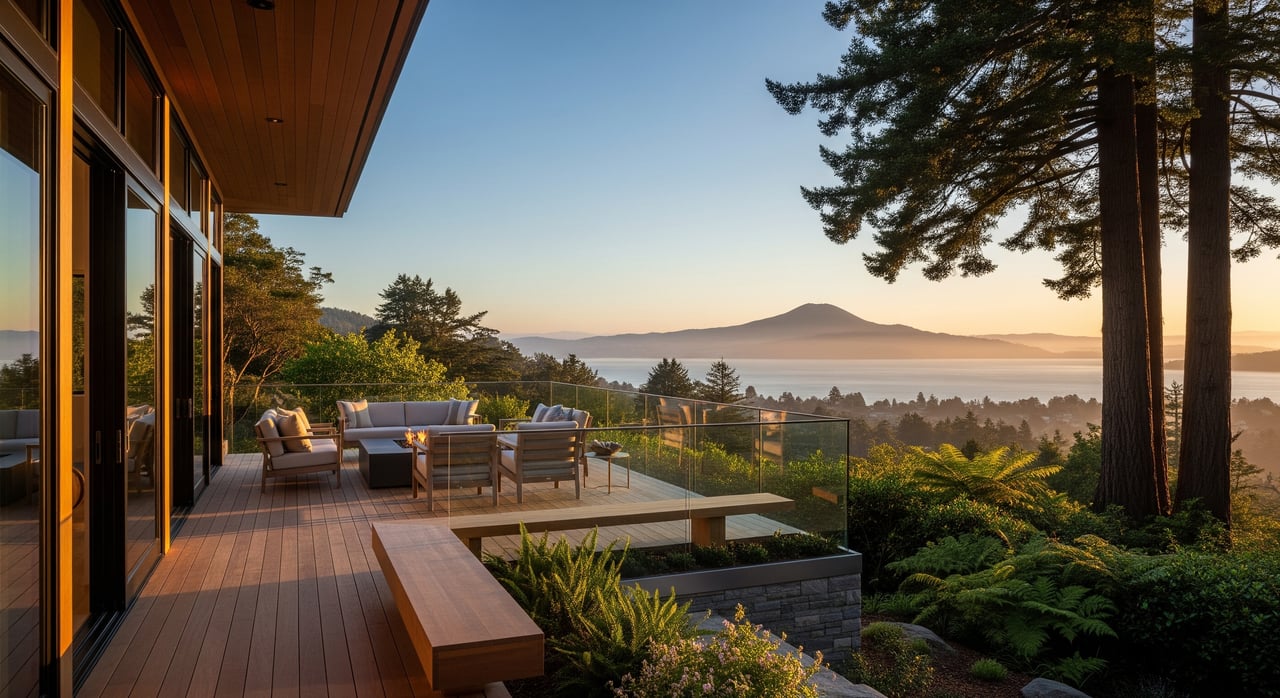
- What you feel: Warm, bright afternoons and faster drying after storms. Ridge crests can be windy.
- Where it occurs: South- and west-facing slopes above Mill Valley and sunlit parcels that overlook the bay.
- What it means: Excellent light, views, and solar potential. Landscaping may need more irrigation in dry months, and some areas can have higher wildfire risk due to vegetation and exposure.
Transitional inland pockets and corridors
- What you feel: Mixed patterns that shift with wind gaps and daily fog cycles. Urban corridors can feel slightly warmer.
- Where it occurs: Sheltered valleys and portions of the Highway 101 corridor in San Rafael.
- What it means: Variable sun and wind across short distances. Energy use can swing depending on sheltering and orientation.
What this means for your home search
Sunlight and outdoor living
Sun is your friend for light-filled interiors, lush gardens, and outdoor time. South- and west-facing yards get the most direct sun, which is ideal for decks and terraces. Canyon settings offer natural shade and privacy, but they shorten the outdoor season in cool months and limit solar production. Because fog changes by the hour, visit at different times of day to see how the sun and wind actually perform on site.
Tip: Ask your agent or the seller for a simple sun study or shading photos taken at morning, mid-afternoon, and evening. It gives you a more realistic picture of day-to-day use.
Energy and home systems
Marin has a mild climate, but microclimates matter for comfort and operating costs.
- Heating and cooling. Sun-exposed homes benefit from passive solar warmth in winter but can heat up on summer afternoons. Shaded canyons feel cool and damp, which can increase heating and dehumidification needs.
- Heat pumps. Efficient heat pumps fit Marin’s mild temperatures and provide both heating and cooling. You can explore incentives and local guidance through BayREN and programs from Marin Clean Energy.
- Solar PV. Unshaded south- or west-facing roofs deliver the best results. Dense canopy and frequent fog reduce output, so request a shading assessment. For rough estimates, tools like NREL’s PVWatts show how roof angle and shading affect production.
- Ventilation and moisture control. In canyon homes, a well-insulated envelope plus balanced ventilation can help manage humidity. The U.S. Department of Energy provides general heat pump and efficiency guidance, and the EPA’s moisture resources explain best practices for mold prevention.
Moisture and indoor air quality
Shaded, slow-drying sites deserve extra attention during inspections. Look for staining, peeling paint, moss, and musty odors near crawlspaces and basements. Confirm attic ventilation, flashing, and gutter performance. If humidity is high, consider ventilation with heat or energy recovery and dehumidification as part of the HVAC plan. The EPA’s mold and moisture guidance is a helpful primer to share with your inspector.
Landscaping, trees, and drainage
Large redwoods and evergreens add beauty and privacy, but they cast significant shade and drop heavy litter. Tree roots may impact drainage paths and hardscapes. On steep lots, verify grading, retaining walls, and erosion control. For climate-smart planting and water use, explore drought-tolerant, fire-wise options through the Marin Municipal Water District.
Wildfire and defensible space
Sun-exposed slopes and ridgelines often sit within higher wildfire hazard areas. Canyons are still vulnerable to embers, so defensible space and materials matter everywhere. Review parcel location using CalFire’s Fire Hazard Severity Zone guidance and local rules from the Marin County Fire Department. Ask sellers about roof materials, vent screens, and completed vegetation work.
Buyer checklist for tours and inspections
Use this quick checklist to evaluate microclimate fit and reduce surprises after move-in.
- Visit at least three times: early morning for fog, mid-afternoon for sun, and evening for cooling and wind.
- Track sun and shade on main living areas, the backyard, and roof zones where solar might go.
- Look for moisture signs: peeling paint, stains, moss on hardscapes, and musty odors in basements or crawlspaces.
- Confirm drainage: gutters, downspouts, and ground slope should move water away from the foundation.
- Assess tree impacts: canopy over roofs, debris in gutters, root conflicts with paths or driveways.
- Evaluate access and safety: steep or narrow roads, turnarounds for emergency vehicles, and visibility.
When you are serious about a property, request targeted evaluations:
- Moisture-focused inspections with humidity readings or infrared scans for shaded or canyon homes.
- Roof and solar readiness review, including shading, structure, and age.
- HVAC assessment that considers ventilation and possible dehumidification needs.
- Geotechnical or hillside report for steep sites or visible retaining walls.
- Wildfire vulnerability and defensible space compliance if the property is in a wildland-urban interface area.
- Arborist review if large trees are close to structures or utilities.
Local resources you can trust
Keep these resources handy as you compare homes and neighborhoods.
- Marin County Planning and Building for parcel maps, slope rules, and permits: Marin County Community Development Agency
- Wildfire maps and defensible space guidance: CalFire Fire Hazard Severity Zones and Marin County Fire Department
- Energy incentives and support: BayREN and Marin Clean Energy
- Solar production estimates: NREL PVWatts
- Moisture and indoor air quality basics: EPA Mold and Moisture
- Water-wise landscaping and drought info: Marin Municipal Water District
Putting it all together
Choosing the right Mill Valley or San Rafael home often comes down to feel. Do you want afternoon warmth on a terrace, or a cool, forested retreat? Do you plan on solar, a vegetable garden, or a low-maintenance yard under the trees? With a clear microclimate plan, you can align the site with your lifestyle, manage maintenance, and make smart energy choices.
If you want a property tour strategy tailored to sun, fog, wind, and wildfire considerations, connect with Carla Giustino for neighborhood-based guidance and a seamless search process.
FAQs
How does fog affect outdoor living in Mill Valley?
- Bayside and canyon areas see more morning and evening fog in warm months, while south-facing slopes and ridgelines stay sunnier. Visit at different times to gauge daily patterns.
Can I install solar on a home with trees or nearby hills?
- Yes, but output depends on shading and roof orientation. Request a shading study and use tools like NREL PVWatts to estimate production before you commit.
Do shaded canyon homes cost more to heat?
- They can, due to limited passive solar gain and higher humidity. Efficient heat pumps, good insulation, and balanced ventilation can keep comfort high and costs controlled.
Where is wildfire risk typically higher in Marin?
- Sun-exposed slopes and ridgelines often fall in higher hazard areas, but embers can impact any location. Check CalFire’s hazard maps and confirm local defensible space rules.
What should I prioritize when touring homes in Mill Valley?
- Focus on sun and shade on living spaces and yards, roof shading for solar, drainage and moisture signs, tree proximity, slope stability, and access for emergency vehicles.